

Building the digital commerce platform for a heritage fragrance brand
Goloka had been making incense and fragrance products for decades. Its digital presence hadn't evolved in the same way.
Contents · 15 chapters
Building the digital commerce platform for a heritage fragrance brand
Goloka had been making incense and fragrance products for decades, with customers across India and international markets. But its online presence hadn't kept up.
I started working with Goloka to set up direct online sales, and took on product design, Shopify, catalogue structure, SEO and implementation.
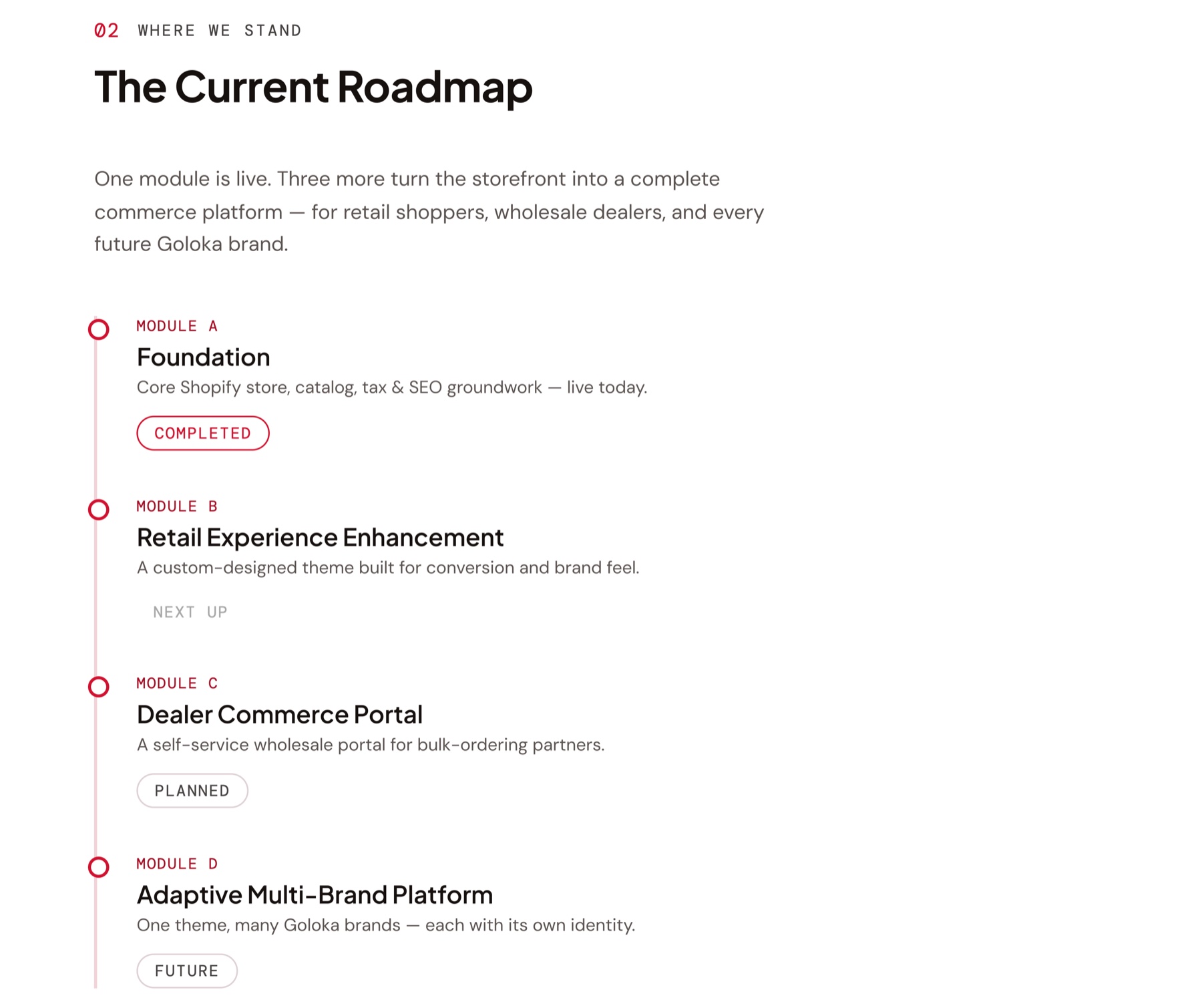
It started as an online store and has grown into a larger piece of work: rethinking retail, building a custom Shopify theme, and working out how the same platform can serve dealers and future Goloka brands.
- ROLE
- Product Designer · Development
- SCOPE
- UX/UI · Shopify · E-commerce · SEO · Development
- ENGAGEMENT
- End-to-end · Ongoing
- CURRENT STAGE
- Phase 1 live · Phase 2 in progress
The product existed. The digital experience didn't.
Goloka already had an established catalogue and customer base.
Its older website, however, worked primarily as a digital catalogue. Customers could browse ranges and learn about the company, but purchasing wasn't integrated into the core experience.
The problem was bigger than an outdated interface.
The business needed the basics of selling online: structured products and collections, direct purchasing, responsive behaviour, taxation, search visibility, and a storefront that could grow with the brand.
Establishing the commerce foundation
I started with the basics instead of jumping to an elaborate redesign.
Goloka has a broad catalogue across incense, oils, candles, diffusers, soaps, dhoop and other fragrance products. That catalogue first needed to work as a coherent online store.
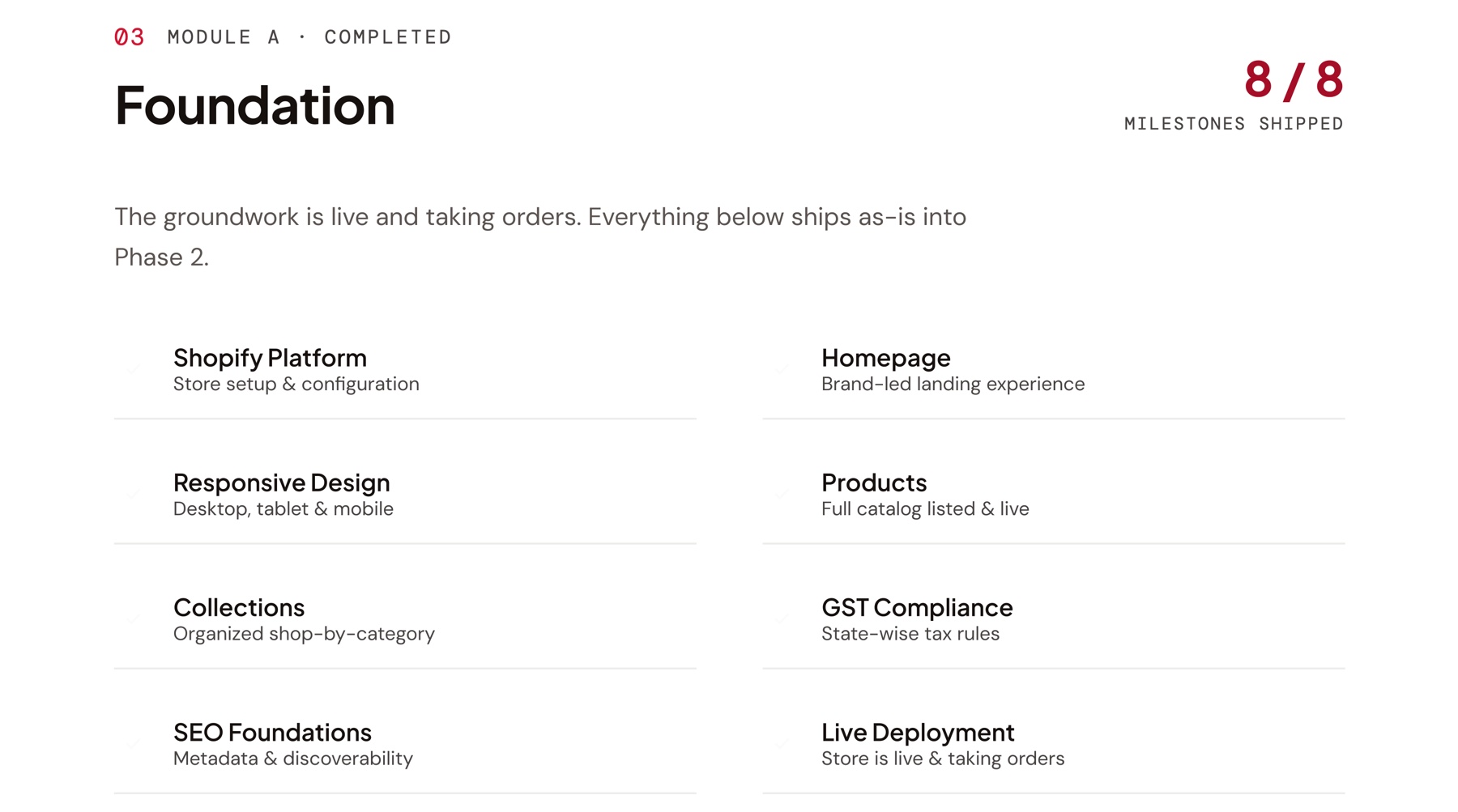
I worked on the whole storefront: setting up Shopify, structuring products and collections, responsive behaviour, GST configuration, SEO foundations and deployment.
The first phase produced a working store that is now live and taking orders.
A large catalogue needed hierarchy before it needed decoration.
One of the less visible parts of the project was organising how people move through Goloka's range.
The storefront couldn't treat dozens of products as one flat catalogue. Collections had to give people clear ways in, and each product page needed enough information for someone to decide to buy.
That meant thinking about how these connect: Category → Collection → Product → Cart → Checkout.
So I stopped designing each page on its own and treated them as steps in one path to checkout.
- – collections
- – products
- – collections
- – products
- – collections
- – products
Designing the storefront
With the structure in place, the interface could do more than list stock.
The experience needed to balance two things: help people shop quickly, and keep Goloka's character as a fragrance brand.
That shaped how I approached collection pages, product presentation, navigation, responsive layouts and brand content.
The storefront became the place where Goloka's catalogue, story and selling meet.
Selling fragrance online means communicating something people cannot experience through a screen.
Fragrance is harder to judge online than most physical products.
So a product page couldn't rely on a pack shot, a title and a price.
It had to give enough context about the product and its scent while keeping buying simple.
That pushed the page toward a mix of story, information and a clear way to buy.
Search was part of the product
SEO wasn't something I wanted to add after designing the storefront.
For an online store, people often find you before they ever see the homepage.
So alongside the store structure, I set up the groundwork for search: metadata, and how products and collections were structured.
It changed how I thought about the site. The homepage isn't always where a visit starts.
Shipping the first version
The first phase gave Goloka infrastructure it hadn't had before. The store went live and started taking orders.
Going live also changed the project. Once the basic commerce problems were solved, the limits of the first version were easier to see.
The next question wasn't: How do we improve this website?
What should Goloka's commerce experience become next?
Moving beyond the first storefront
I'm now working on the next phase of Goloka's online store.
Rather than keep layering changes onto the current storefront, I'm planning this one properly, as a product and a technical system.
Each part below is a separate stage on the current roadmap, not something already shipped.
From configuring a theme to owning the experience
The first version proved the basics work. The next one lets me rethink the experience with fewer constraints.
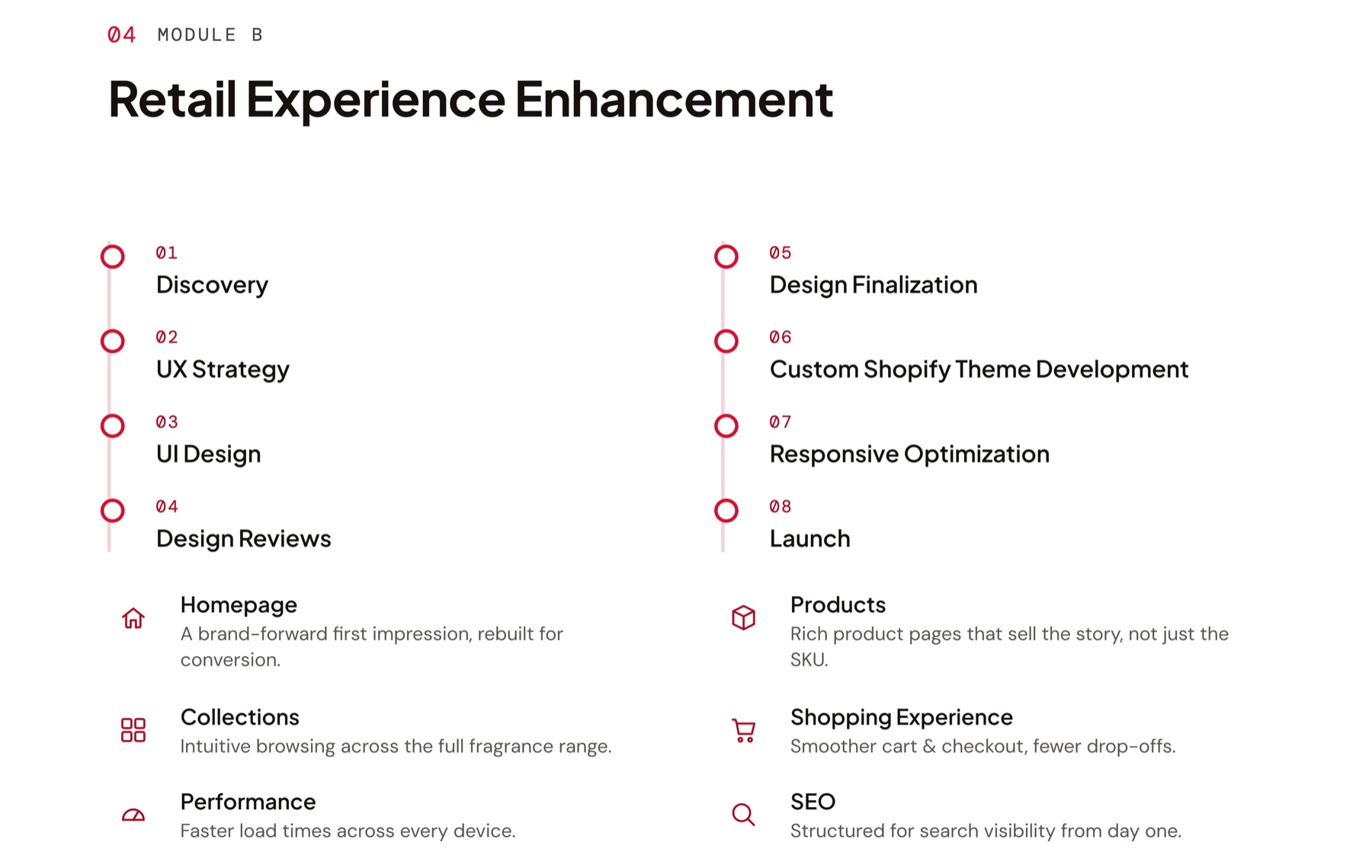
I'm now designing and building a custom Shopify theme, and looking again at the homepage, collections, product pages, shopping experience, responsiveness, performance and search foundations.
I'm not handing the design over to a developer. I'm using Claude Code in the build, so I can go straight from an interaction decision to how it behaves in the real product.
The point is to shorten the distance between what I design and what customers use, not to have AI generate a storefront.
Retail isn't the whole business
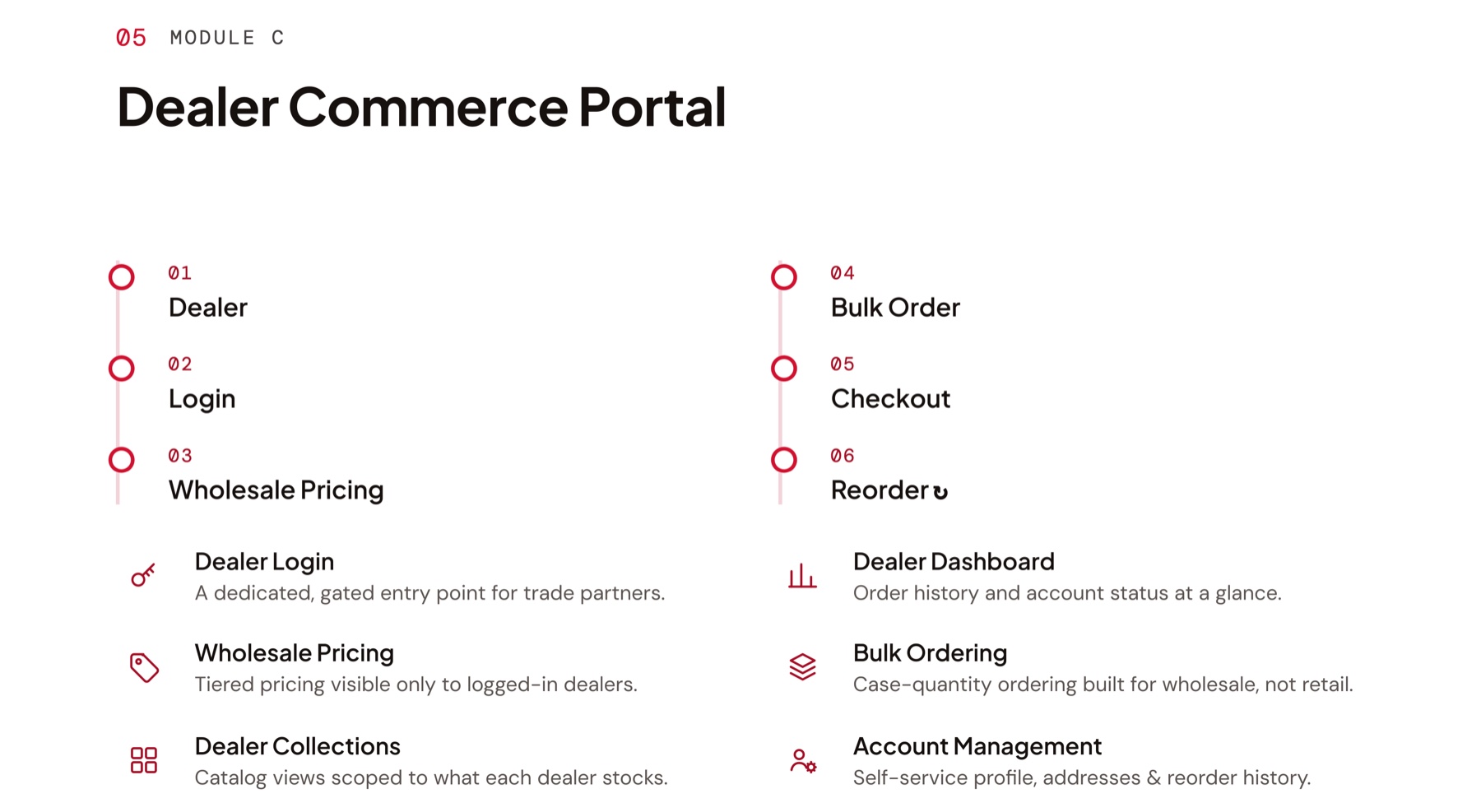
Goloka also works with wholesale partners.
Their needs aren't a bigger version of the consumer checkout. A dealer needs different information and different actions: gated access, wholesale pricing, bulk quantities, the right catalogue views, account information and repeat ordering.
The current roadmap includes dealer-specific pricing, bulk ordering, collections, order history and account management.
Designing for more than one brand
The longer-term problem is bigger.
If more Goloka brands need their own online stores, building a separate storefront for each one means doing the same work again.
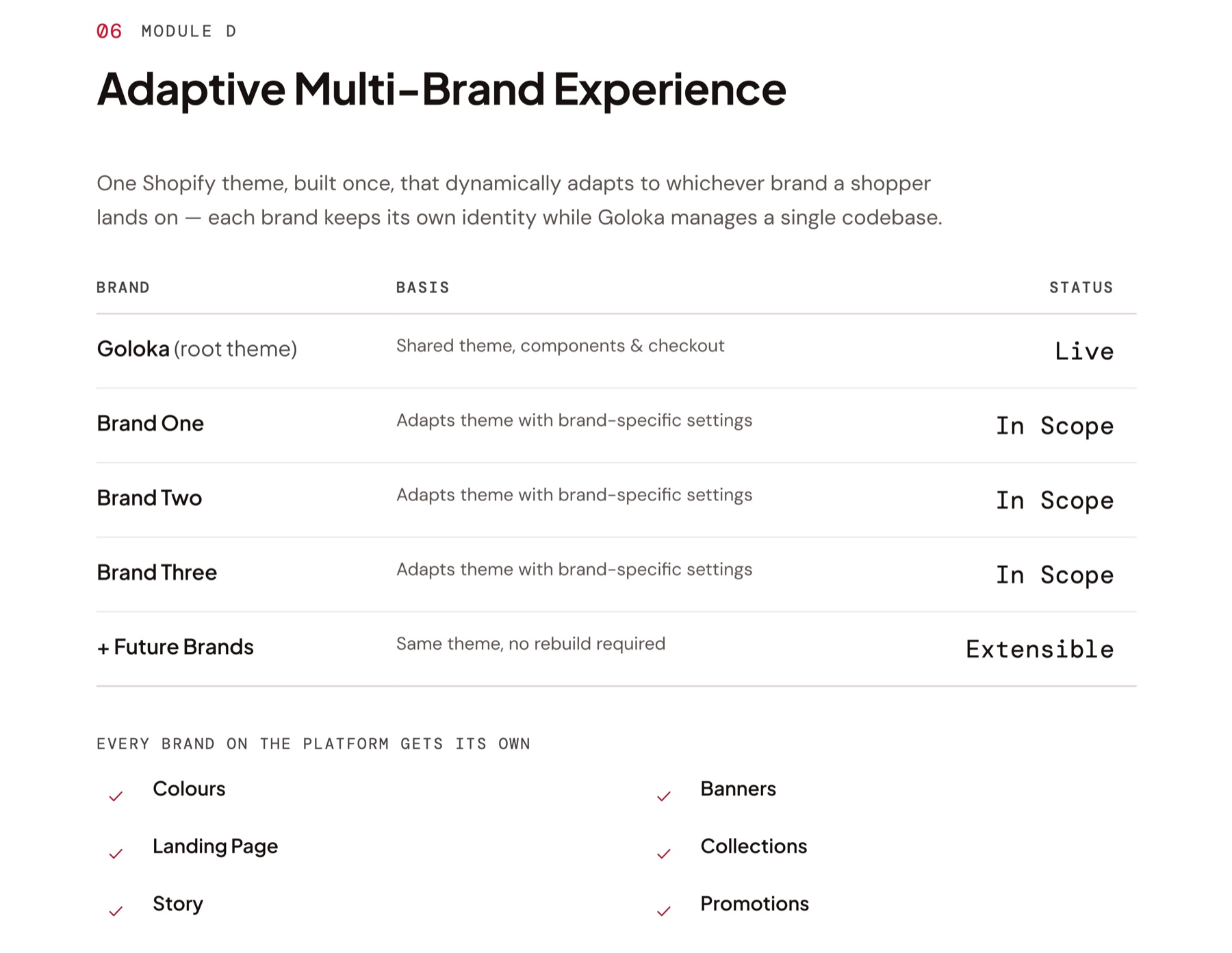
So the proposal explores one shared Shopify theme that changes its identity for whichever brand is using it.
The components and commerce logic stay shared. Brand-level things can change: colours, banners, landing pages, collections, stories and promotions.
One foundation. Different identities.
- – identity
- – colours
- – content
- – collections
- – identity
- – colours
- – content
- – collections
- – identity
- – colours
- – content
- – collections
The platform I'm building toward
Retail, dealers and future brands, on one shared foundation.
- – discovery
- – collections
- – products
- – checkout
- – login
- – pricing
- – bulk order
- – reorder
- – identity
- – content
- – collections
- – commerce
From a website to infrastructure.
What you can see is a new storefront. The bigger change is underneath it.
Goloka went from a website that mostly showed its catalogue to a working direct-commerce foundation.
I started with the immediate problem: structuring the catalogue and getting the store live. Now I'm working deeper in: how the brand should sell, how retail and wholesale differ, how design and implementation can happen closer together, and how the platform can support what Goloka builds next.
The project is still going.
The store, as it ships
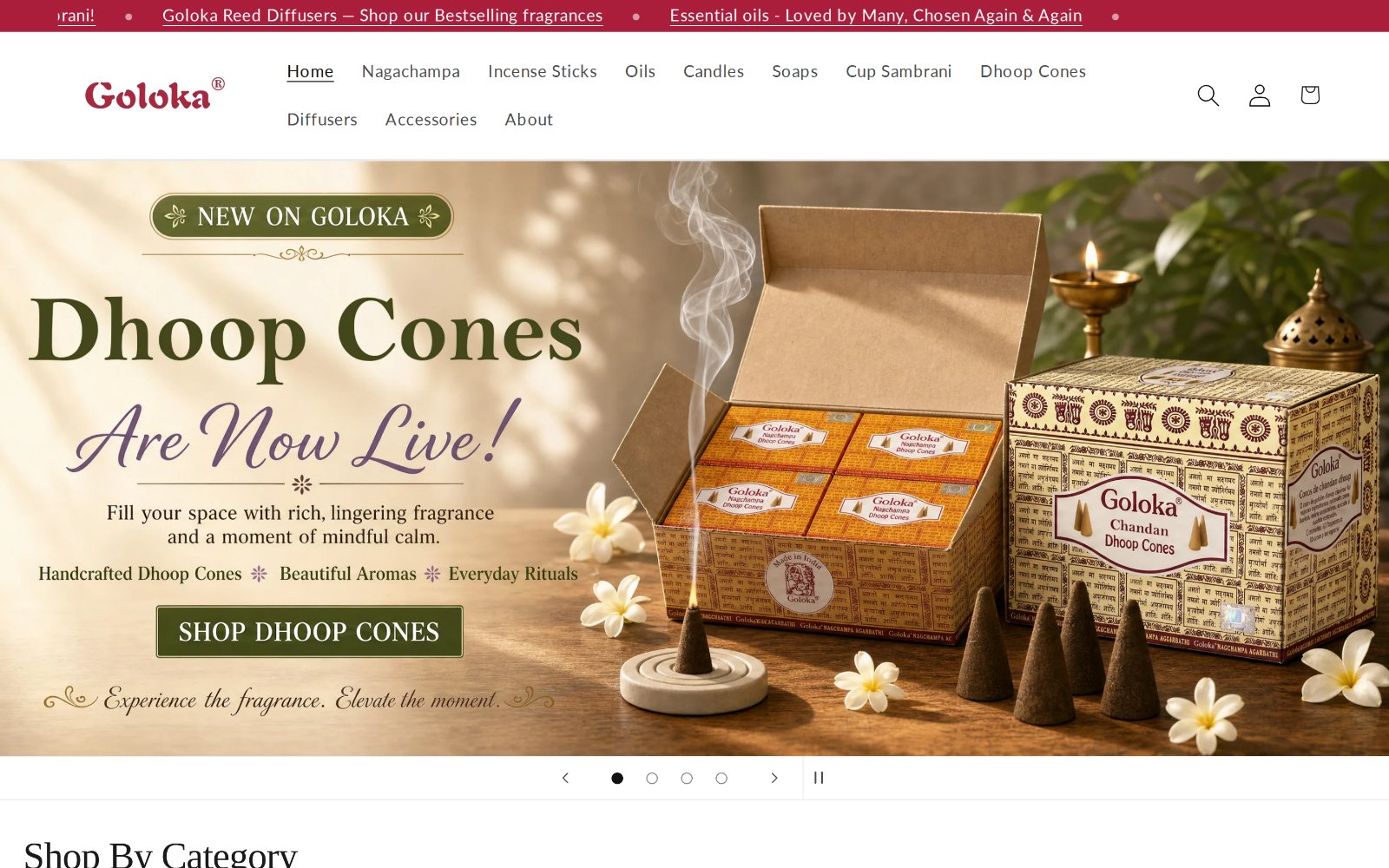
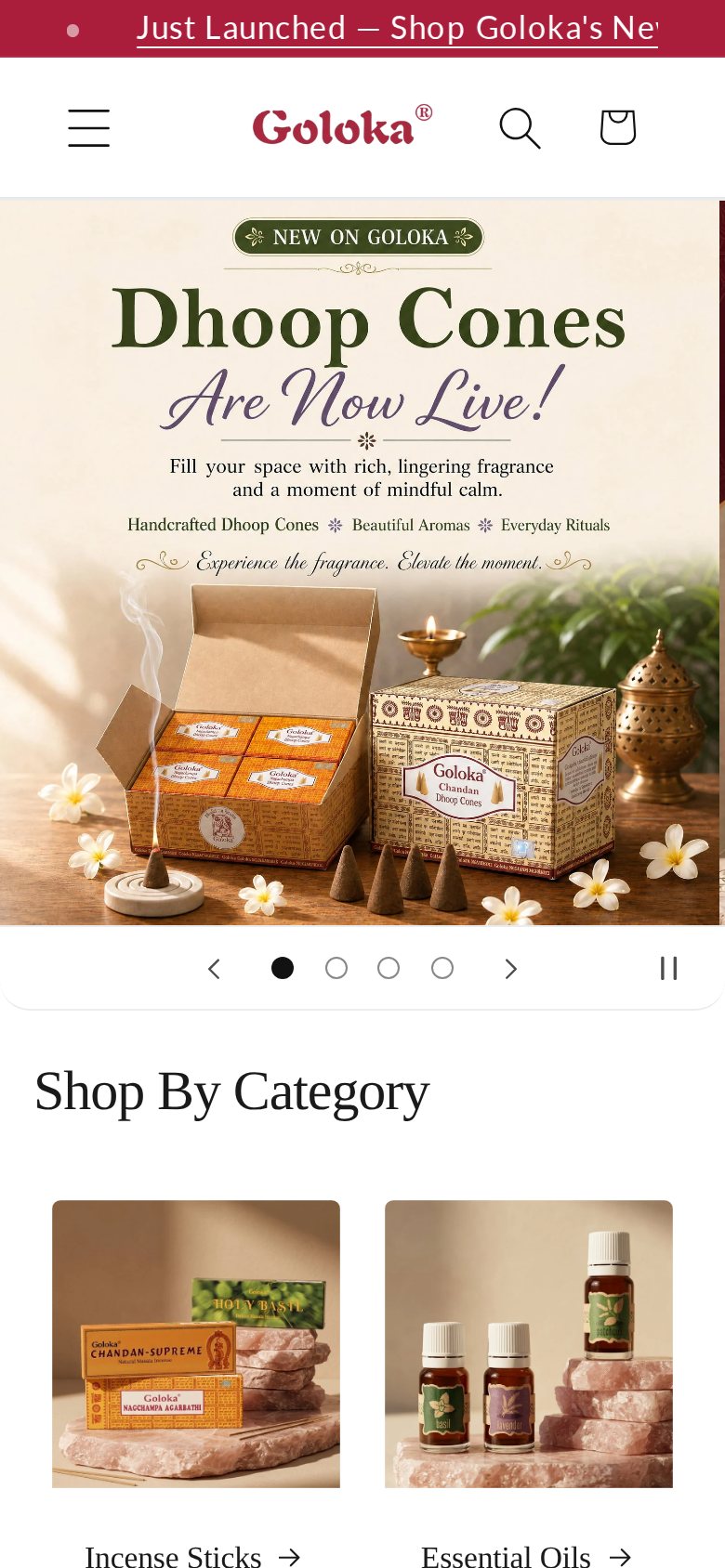
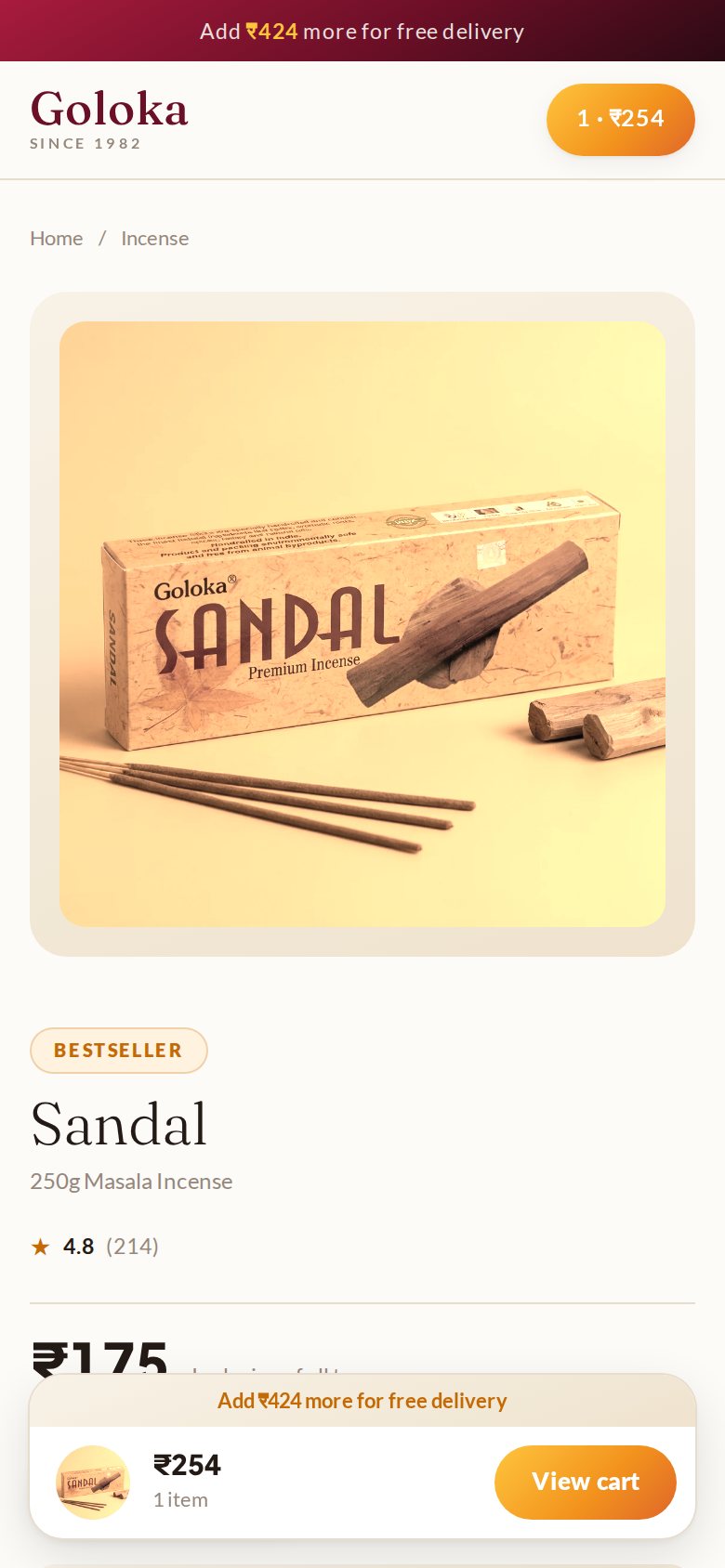
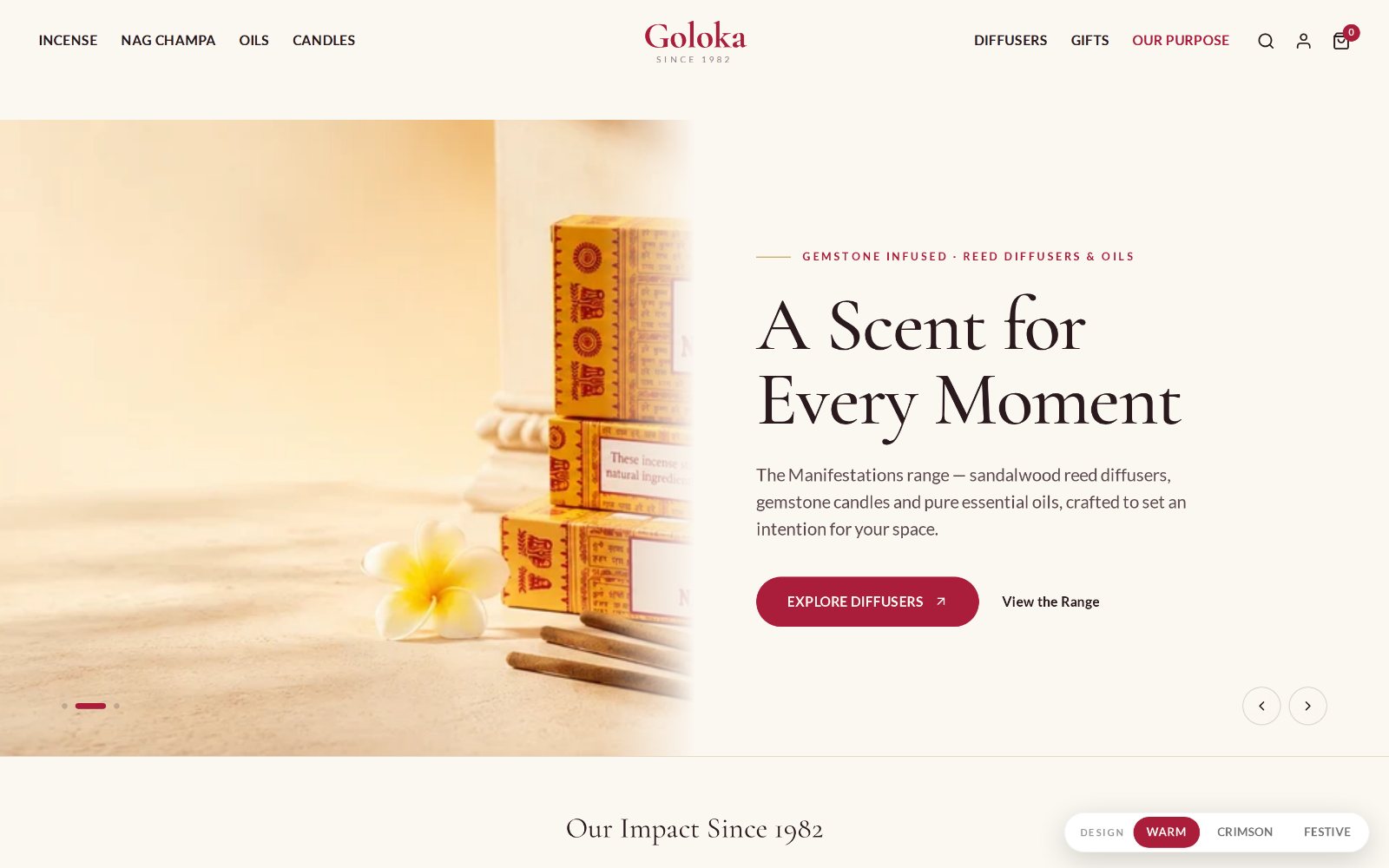
The home leads with the product and the ritual. The product page is built around scent notes and delivery, and the basket shows how far you are from free delivery instead of interrupting you about it.
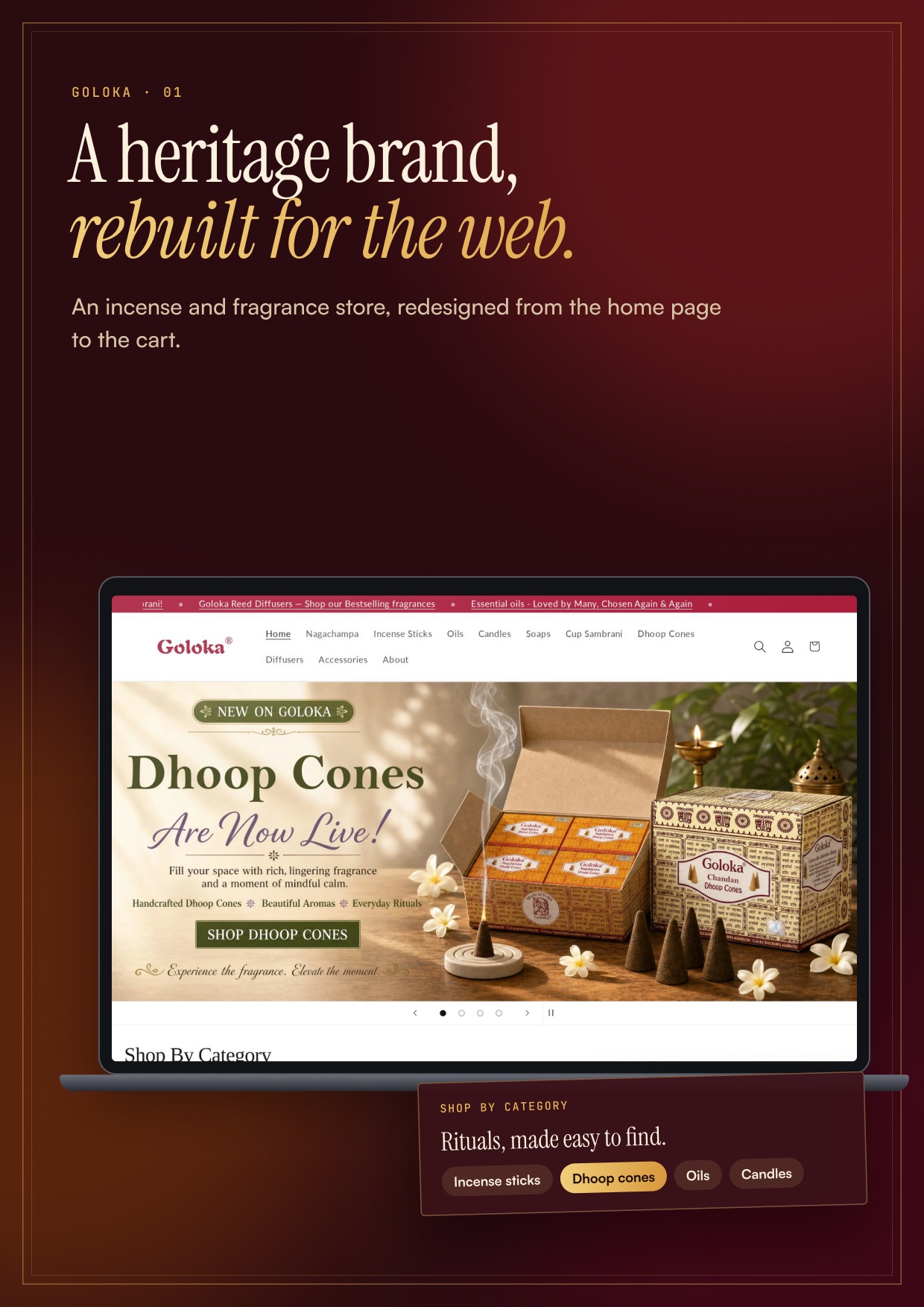
A heritage brand, rebuilt for the web
The home page and categories.
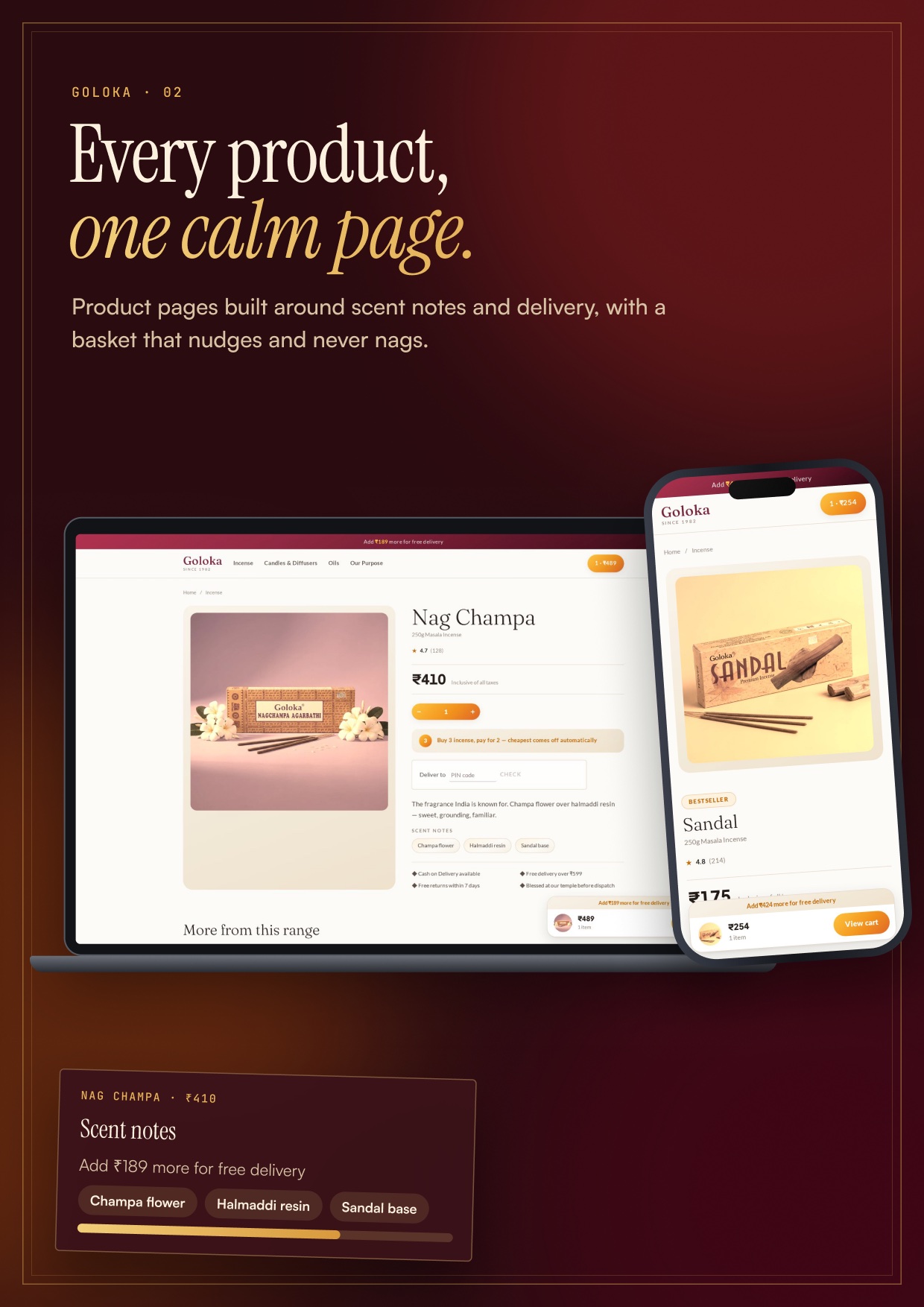
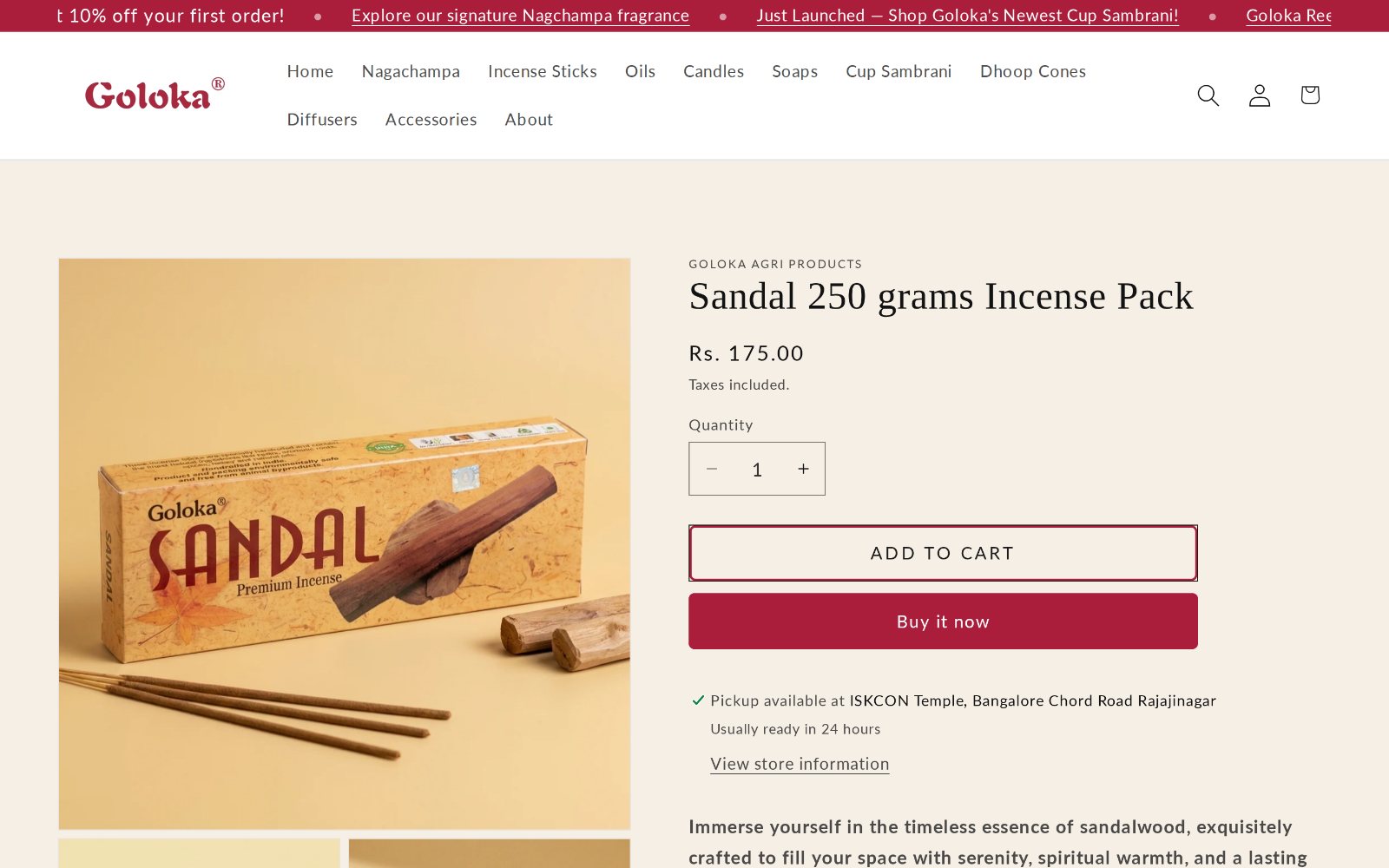
Every product, one calm page
Nag Champa, on desktop and phone.
FocusNotch
A time tracker for freelancers that lives in the MacBook notch, with the Mac’s pop-ups, notifications, music and meetings routed through it. I designed it and built it in SwiftUI and AppKit.